


Brazil is one of the most unequal countries in the world1, with the poorest 50% of the population receiving only 9% of national income2 and 64 million people suffering from severe hunger or food insecurity3. This is not for lack of natural resources. One of the central problems is that 46% of the country's land is in the hands of 1% of landowners4. That's where Movimento dos Trabalhadores Rurais Sem Terra (MST) comes in.
 Article 5, XXIII of the Brazilian Constitution states that "property shall comply with its social purpose", and Article 184 says: "The Union has the power to expropriate on account of social interest, for purposes of agrarian reform, the rural property which is not performing its social function" 5. In other words, the use and tenure of land, especially when it is unoccupied and serving no purpose, can be contested.
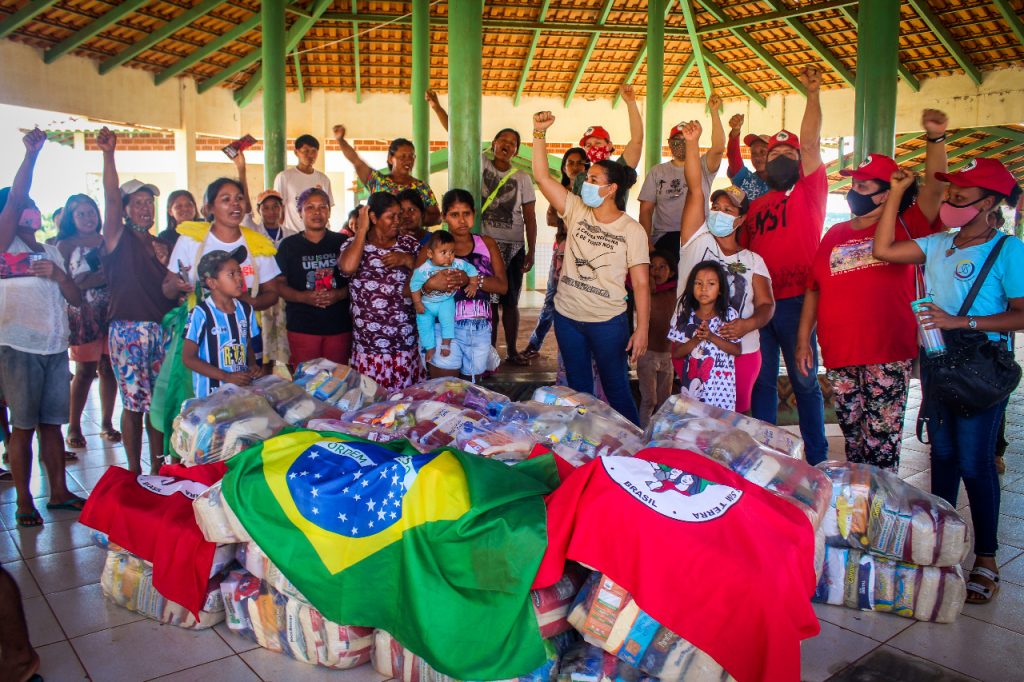
MST, the world's largest social movement, has its roots in this struggle. It grew out of Brazil's land occupation movement. It became a national organization in 1984 and since then about 450,000 families have won land tenure through struggle and organization, with another 65,000 fighting for legal recognition6.
With a membership of about 1.5 million, MST is the largest progressive movement in South America7. It is hard to grasp the sheer scale of MST's operations. There are around 1,900 productive associations, 185 cooperatives, and 120 agribusinesses spread across MST settlements and camp areas8. "...the movement also develops a rural education project, with more than 2,000 schools and 200,000 students, in addition to the Florestan Fernandes National School" 9. In 2022 MST launched a plan to plant 100 million trees within 10 years 10.
Reactions against MST activism have sometimes been brutal, with a series of massacres and more than 300 activists murdered11, often with impunity12. Many more have been attacked and illegally evicted. For many of Brazil's poorest citizens, this is a life and death struggle.
2. Core positions

- See https://worldpopulationreview.com/country-rankings/gini-coefficient-by-country
- See https://wir2026.wid.world/www-site/uploads/2025/12/World_Inequality_Report_2026.pdf
- See https://www1.folha.uol.com.br/internacional/en/business/2024/04/642-million-live-in-households-with-food-insecurity-in-brazil.shtml
- See https://jacobin.com/2025/12/brazil-landless-workers-movement-food
- See https://www.stf.jus.br/arquivo/cms/legislacaoConstituicao/anexo/brazil_federal_constitution.pdf
- See https://thetricontinental.org/dossier-75-landless-workers-movement-brazil/#_edn3
- See https://venezuelanalysis.com/news/venezuelan-govt-joins-forces-with-brazils-mst-to-boost-agroecological-food-production/
- See https://jacobin.com/2025/12/brazil-landless-workers-movement-food
- See https://mst.org.br/2025/05/26/a-ocupacao-de-terras-no-brasil/ (translated)
- See https://mst.org.br/2024/09/22/candidaturas-do-mst-defendem-politicas-publicas-contra-a-fome-e-por-direitos-nos-municipios/
- See https://www.earthisland.org/journal/index.php/magazine/entry/the-growing-political-clout-of-landless-farmworkers-in-brazil/ (translated)
- See https://forestsandfinance.org/news/measured-grave-the-deaths-in-the-fight-for-land-in-brazil/, https://cptnacional.org.br/2023/04/14/conflitos-no-campo-brasil-2023/, https://conectas.org/en/noticias/brazil-is-the-country-that-most-kills-land-activists-according-to-report-by-global-witness/ and
https://www.amnesty.org/en/latest/press-release/2016/04/the-eldorado-dos-carajas-massacre-20-years-of-impunity-and-violence-in-brazil/ - See https://mst.org.br/quem-somos/ (translated)
- See https://www.mstbrazil.org/content/objectives-mst (translated)
- See https://mst.org.br/2020/01/25/coordenacao-nacional-do-mst-lanca-carta-ao-povo-brasileiro/ (translated)
- See https://mst.org.br/2025/03/14/a-solidariedade-entre-os-povos-esta-no-centro-do-internacionalismo-do-mst-diz-dirigente/ (translated)
- See https://mst.org.br/2020/11/13/mst-discusses-proposals-for-building-a-peoples-project-in-brazil/
- See https://thetricontinental.org/dossier-75-landless-workers-movement-brazil/#_edn3
- See https://globaldialogue.isa-sociology.org/articles/the-growth-of-brazils-homeless-workers-movement
- See https://www.amnesty.org/en/documents/AMR19/016/1995/en/
- See https://mst.org.br/2025/03/14/a-solidariedade-entre-os-povos-esta-no-centro-do-internacionalismo-do-mst-diz-dirigente/" (translated)
- See https://mst.org.br/brigadas-internacionalistas/ (translated)
- See https://mst.org.br/comites-de-amigos-as/ (translated)
- See https://mst.org.br/brigadas-internacionalistas/ (translated)
- See https://mst.org.br/2022/11/24/mobilizing-people-power-beyond-elections-in-brazil/
- See https://mst.org.br/2024/07/12/brazils-landless-rural-workers-movement-launches-over-700-pre-candidates-for-2024-elections/